Briefing 01
How a live studio is laid out
A studio floor is organised around sightlines, light placement, camera travel and safety. Pedestals, talent positions and control-room instructions all shape where crews stand and how presenters move.
From camera blocking to rundown timing, this issue looks at the practical work that keeps a studio segment understandable for viewers.
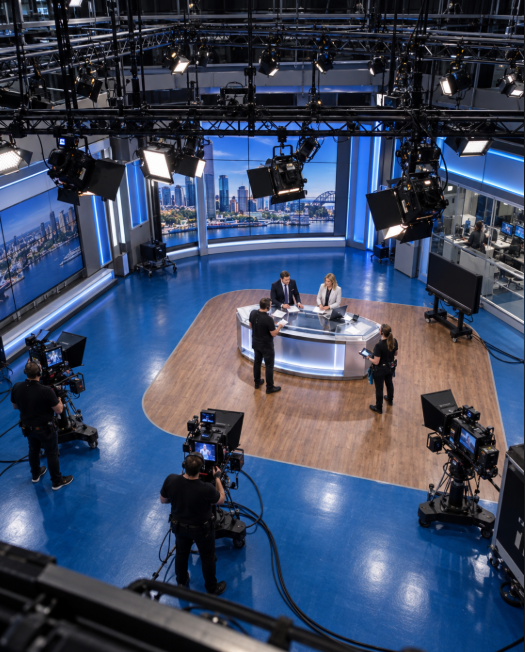
Each article on North Signal Review separates what is directly visible in an image from what requires reporting, technical explanation or outside confirmation. That distinction helps readers understand both media craft and media limits.
The supplied photographs on this site show studio environments, camera positions and audience perspectives. They support articles about production, framing, interpretation and the workings of live media spaces.
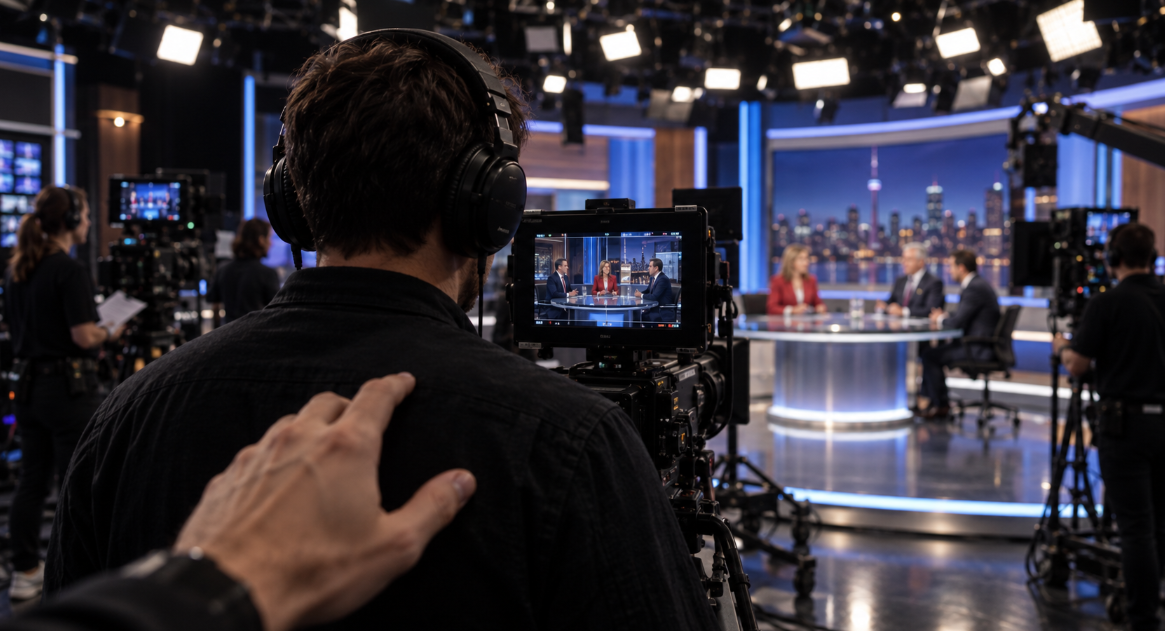
A studio floor is organised around sightlines, light placement, camera travel and safety. Pedestals, talent positions and control-room instructions all shape where crews stand and how presenters move.
Teleprompters help anchors deliver scripts consistently, but they are only one piece of the workflow. Producers, segment notes, timing cues and floor managers remain essential.
A short video excerpt can magnify conflict and hide setup, timing or rehearsal. Media literacy begins by asking where the clip starts, what happened beforehand and who framed the edit.
Directors and technical teams watch multiple sources at once: program output, preview, studio returns and individual cameras. This layered monitoring supports fast decisions under time pressure.